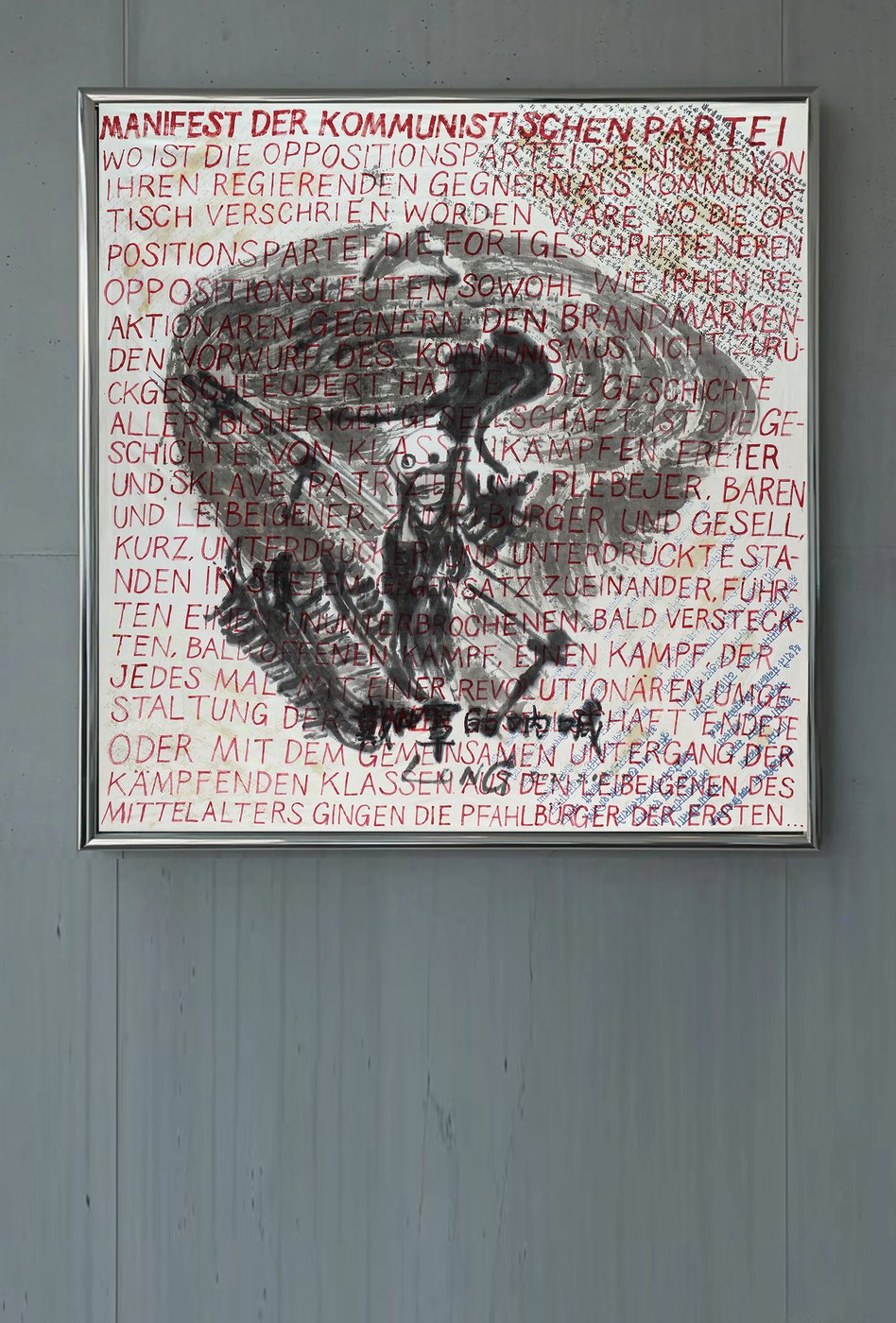
Contemporary Ink · 当代水墨
戴口罩的呐喊
The Scream in a Mask
- 材料 Material
- 大尺寸的丝棉布、水墨、丙烯、蛋彩、马克笔 / Large-format silk floss cloth, ink, acrylic, tempera, marker
- 尺寸 Dimensions
- 245 × 234 cm
- 首展 First Exhibition
- 北艺塘美术馆,北京宋庄,2020 / Beiyitang Art Museum, Songzhuang, Beijing, 2020
- 入选 Selected
- 2025 年大阪世博会国际文化艺术展 / 2025 Osaka World Expo International Culture and Art Exposition
这件艺术作品的关键视觉摘自英文《圣经》、中文《道德经》、阿拉伯文《古兰经》、梵语《金刚经》、德语《宣言》,并用不同颜色的粗马克笔书写。风卷狂澜的水墨漩涡代表了新冠肺炎疫情,而戴着面具的惊愕小人则受到了挪威著名艺术家埃德瓦德·蒙克的《呐喊》形象的启发。三个十字架围栏象征着隔离和死亡,支离倾斜的黄鹤楼像 X,代表危险、禁闭和对未知灾难的恐慌。
画面四角的书法作品分别是《圣经》《道德经》《古兰经》和《金刚经》,它们分别以手写的形式占据了乾、坤、艮、巽的卦象位置,即全世界的各个角落(东北、西北、东南和西南),代表天、地、山和风,这意味着举世受害且互为影响。五个经典文选(均为节录)代表多元信仰下面对共同危难时的无奈与危难下思想的禁锢与迷茫。最早创作时他只想表现反思,后来随着疫情在全世界的蔓延和加剧,作品就具有了全球意义和普世性。
This work was selected for the 2025 Osaka Expo International Cultural and Art Exhibition. The key visuals of this artwork are excerpted from the English Bible, the Chinese Tao Te Ching, the Arabic Qur'an, the Sanskrit Diamond Sutra, and the German Manifesto, written in bold markers of different colors. The swirling ink whirlpool represents the COVID-19 pandemic, while the masked, astonished figure is inspired by the iconic image of The Scream by the renowned Norwegian artist Edvard Munch. Three cross-shaped fences symbolize isolation and death, and the tilted, distorted Yellow Crane Tower, resembling an X, represents danger, confinement, and panic in the face of unknown disaster.
The calligraphic works in the four corners of the image are from the Bible, the Tao Te Ching, the Qur'an, and the Diamond Sutra, respectively. Each is handwritten and occupies the positions of the Qian, Kun, Gen, and Xun trigrams—that is, the four corners of the world (northeast, northwest, southeast, and southwest), representing heaven, earth, mountain, and wind. This signifies that the whole world is afflicted and mutually affected. The five classical selections (all excerpts) represent the helplessness of diverse faiths facing a common crisis, as well as the confinement and confusion of thought under such duress. When he first created the work, he only intended to express reflection. Later, as the pandemic spread and intensified across the world, the work took on global significance and universality.